What happens when you arrive
Arrive fifteen minutes early. Every operator in Canada says this and roughly half of players ignore it, which is why so many rooms start late. You will sign a waiver — usually on a tablet, sometimes on paper, always quickly — and stow phones, bags and coats in a locker or cubby. A few operators let you keep a phone for photos; most do not, because a phone is a flashlight, a calculator and a distraction, and the room has been designed without it.
Then comes the briefing. A game master explains the story, the rules, how hints work and how to leave if you need to (the door is never actually locked; fire code in every province requires it to open). Listen to the briefing. It is not filler. The game master is telling you, sometimes quite plainly, what kind of puzzles the room contains and what you should not touch.
The first ten minutes
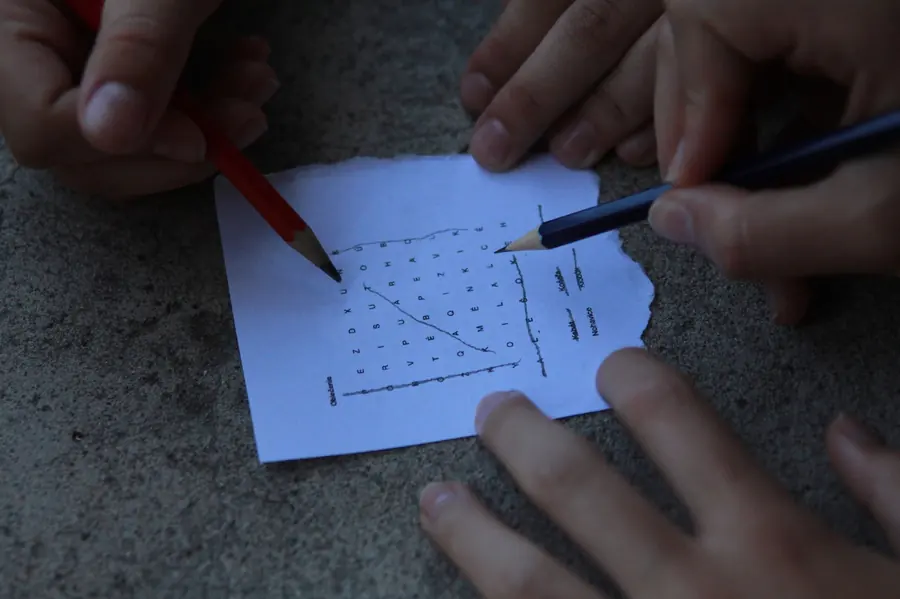
The room opens and everyone freezes, then everyone grabs the same drawer. Don’t. Split the room by wall and search your section thoroughly: under things, behind things, inside pockets and books, on the undersides of tables. Say what you find out loud — “four-digit lock on the trunk”, “a key with a blue tag”, “a paper with a grid of letters” — and put found items on one surface where everyone can see them. Most rooms hide a dozen small objects in the first minutes, and a group that finds eleven of them will have a good hour.
Then match things. A four-digit lock wants four digits; a paper with four circled numbers is probably them. A key with a blue tag opens something blue. Beginners overthink this stage and start looking for meaning in the carpet. The early puzzles are almost always literal.
Nobody has ever regretted taking a hint. Plenty of groups have regretted the fifteen minutes before they did.
How hints really work
Every room has a hint system: an intercom, a screen, a walkie-talkie, or a game master who walks in. Policies vary. Some operators give unlimited hints on request; some give three; some deduct time from the leaderboard. Whatever the policy, take the hints. A group that asks for help at minute twenty finishes the room; a group that refuses on principle spends minute thirty-five to fifty staring at a bookshelf. The game master is watching on camera and already knows which lock you are stuck on. You are not being clever by making them wait.
Ask specifically — “we can’t find the fourth digit for the trunk” rather than “we’re stuck” — and you will get a better hint.
Etiquette that game masters wish everyone knew
Do not force locks. If a code doesn’t open it, the code is wrong, and the lock will be broken for the next group. Do not climb on furniture or pull on fixtures unless the briefing said you could; anything that needs force is not a puzzle. Do not take things apart that are screwed together. Do not bring drinks in. And do not, whatever the joke, try to leave through the ceiling — someone always asks.
Inside the group, the etiquette is simpler: talk, share, and let the person who found the puzzle try it first. The loudest player is rarely the most useful one.
What to wear and bring
Comfortable shoes and clothes you can crouch in. Rooms are kept cool, so a layer helps, but a heavy winter coat gets stowed. Bring reading glasses if you use them — small print is common and the light is theatrical. If anyone is claustrophobic, colour-blind or sensitive to strobes, tell the operator at booking; most rooms have workarounds, and a game master who knows in advance can steer you.
Your first hour, in order
- Book a room rated 2/5 or 3/5, sixty minutes, adventure or mystery theme rather than horror.
- Arrive fifteen minutes early, sign, stow, listen to the briefing.
- Search by wall for five minutes, calling out finds and pooling them.
- Match literal clues to literal locks. Save the deep thinking for later.
- Ask for a hint by minute twenty if nothing has opened in five minutes.
- Take the team photo, even if you didn’t finish. You will want it.
Questions we get asked
Is the door really locked?
No. Fire code in every province requires the exit to open from the inside at all times. The “lock” is part of the story.
Can I keep my phone?
Usually not. Phones go in a locker with your bag. A few operators allow phones for photos only; the listing or briefing will say so.
What if we don’t finish?
Most first-time groups don’t. The game master will walk you through the remaining puzzles, which is often the best part of the visit.